Academic Activities
The Aryabhatta Research Institute of Observational Sciences (ARIES), Nainital, is a premier autonomous research institute under the Department of Science & Technology (DST), Government of India. The institute is actively engaged in a diverse range of comprehensive academic initiatives designed to foster international excellence in frontline research and advanced training.
Our core academic programs are strategically structured to support Junior Research Fellows (JRFs), Senior Research Fellows (SRFs), Ph.D. students, Postdoctoral Fellows (PDFs), and short-term project interns. By providing access to state-of-the-art observational facilities—including world-class astronomical telescopes and advanced atmospheric instrumentation—ARIES empowers the next generation of scientists to advance their academic and professional development.
Through robust mentorship, regular seminars, and specialized training programs like the Visiting Student Program and ATSOAA, the institute cultivates a vibrant, collaborative ecosystem dedicated to unlocking the mysteries of Astronomy, Astrophysics, and Atmospheric Sciences.
Academic Committee Work Allocation
ARIES conducts annual selections for the Junior Research Fellowship (JRF) program through a rigorous interview process, typically held between May and June. Applications are invited from candidates with an M.Sc. in Physics, Astrophysics, or Environmental Sciences, who have qualified for national-level examinations such as JEST, NET, or GATE. Additionally, candidates with an INSPIRE fellowship and meeting other eligibility criteria are considered. Selected candidates are enrolled as JRFs and undertake a one-year pre-Ph.D. coursework program. Upon successful completion, they commence doctoral research under the mentorship of ARIES scientists. After two years, a comprehensive academic review is conducted to assess their progress, and eligible students are promoted to Senior Research Fellow (SRF) status. The Ph.D. program at ARIES is designed to be completed within five years. ARIES is one of the 33 participating institutions in the Joint Entrance Screening Test (JEST), a national-level examination recognized by the Science and Engineering Research Board (SERB). JEST serves as an eligibility test for Ph.D. and Integrated Ph.D. programs in Physics, Theoretical Computer Science, Neuroscience, and Computational Biology. As a participating institution, ARIES is actively involved in organizing and coordinating the JEST examination when designated as a host. Exam centers are mutually agreed upon between ARIES and the coordinating institute. Candidates with top JEST rankings are invited to interview for the Ph.D. program at ARIES.
Click here for more details...ARIES, in collaboration with the Department of Applied Optics and Photonics, University of Calcutta (CU), offers an Integrated M.Tech.-Ph.D. (Tech.) program in Astronomical Instrumentation. The degree is awarded by the University of Calcutta. The M.Tech. coursework spans two years, divided into four semesters. Upon successful completion, students may opt to register for the Ph.D. (Tech.) program, subject to meeting minimum academic requirements and selection criteria. Eligible applicants include: candidates with a three-year B.Tech. degree (Post-B.Sc. Hons) in Optics and Optoelectronics or Radio Physics and Electronics from CU, candidates with a B.Tech./B.E. degree in Electrical, Instrumentation, Electronics and Communications, Computer Science, or Mechanical Engineering from any AICTE-recognized institution and applicants with an M.Sc. in Physics, Electronic Science, Applied Mathematics, or Applied Physics from a UGC-recognized institution.
Click here for more details...ARIES welcomes applications year-round for positions including Post-Doctoral Fellows (PDF), Research Associates (RA), and Senior Project Associates (SPA). PDF applications are reviewed three times a year (January, May, and September) by the Post-Doctoral Committee, along with invited experts from reputed research institutions. Selected candidates are involved in both independent and collaborative research, as well as developmental activities, under the mentorship of ARIES scientists.
Click here for more details...Visiting Student Programme of ARIES (VSPA)
The Visiting Student Programme of ARIES (VSPA) is designed to promote scientific and engineering research among undergraduate and postgraduate students from various institutions. Selected students work on defined research or instrumentation projects under the guidance of ARIES scientists and engineers. The program runs throughout the academic year, offering short- and long-term training opportunities for Bachelor’s and Master’s level students. ARIES provides local hospitality for all selected students. Additionally, ARIES hosts: a summer internship program for students selected by the Indian Academy of Sciences (IASc), offering a stipend of ₹25,000 for 8 weeks, and Short-term projects under the NIUS (National Initiative on Undergraduate Science) program, where undergraduate students visit ARIES to work closely with faculty members.
Click here for more details...| S.No. | Name | Area of Interest |
|---|---|---|
| 1. | Naja, Manish Kumar | Air quality and climate change, Regional air-pollution and intercontinental transport, Wind profiling using radars, Tropospheric studies from satellite data, Ground based and balloon-borne observations of trace gases, aerosols, and meteorological parameters in the lower atmosphere, Regional and box modeling. |
| 2. | Kumar, Brijesh | Studies of highly energetic cosmic explosions; Formation and evolution of stars and galaxies; Development of optical/infra-red/NIR instrumentation; Operation of Optical-NIR observational facilities |
| 3. | Chattopadhyay, Indranil | Investigate the fundamental processes that dominate in and around accreting objects like black holes and neutron stars. Accretion-jet systems, jet acceleration, production of thermal and non-thermal radiation, and developing mathematical-fluid codes to study magnetised and non-magnetised fluid. |
| 4. | Gupta, Alok Chandra | Multi-wavelength flux, polarization and spectral variability of blazars on diverse timescales; quasi periodic oscillations in blazars and narrow line Seyfert 1 galaxies |
| 5. | Yadav, Ramakant Singh | Open and globular star clusters, kinematic study of globular clusters, studying the motion of stars and hot stellar populations within them |
| 6. | Pandey, Shashi Bhushan (on deputation to SERB) | Time domain astronomy and energetic transients, supernovae, Gamma-ray bursts, stellar evolution, optical instrumentation |
| 7. | Pandey, Jeewan Chandra | multiwavelength studies of cataclysmic variables, exploring the winds emanating from massive stars, investigating the magnetic activities of chemically peculiar stars, and dynamics in the extended atmosphere of irregular stars, polarization of cosmic sources, and their instabilities. |
| 8. | Snehlata | Star clusters and stellar evolution, variability of stars within clusters, study of eclipsing binary systems within star cluster environments |
| 9. | Singh, Narendra | Mountain Meteorology, Lower Atmospheric Dynamics, Micrometeorology, Vertical profiling of Aerosols Using Lidar, Radar Meteorology, Air Pollution and Climate Change |
| 10. | Joshi, Yogesh Chandra | Photometric Studies of Open Star Clusters, Study of Variable stars, Follow-up study of Extrasolar Planets, Understanding the Galactic archaeology, Star formation in Local group of galaxies |
| 11. | Joshi, Santosh | Investigation of Photometric Variability in Chemically Peculiar Stars, High-Resolution Spectroscopy and Spectro-Polarimetry of Pulsating Am stars, Variable stars in Open clusters, Spectroscopic Investigation of Binary Stars, Intra-night Variability of Blazars, Instrumentation |
| 12. | Saurabh | Star formation and low-mass star/stellar evolution, deep multi-epoch multi-wavelength imaging / spectroscopic polarimetric studies of star-forming regions / young pre-main sequence stars |
| 13. | Dumka, Umesh Chandra | Observations and model simulations of aerosols and air pollutants, radiative forcing estimations, cloud-aerosol interactions, secondary formation of aerosols, source apportionments, health impacts of aerosols and climate/air quality assessment |
| 14. | Misra, Kuntal | Time-domain astronomy, high energy astrophysical transients, sky surveys with optical telescopes, transient detection in big data and classification using machine learning, artificial intelligence |
| 15. | Panwar, Neelam | Star formation in young star clusters, bright-rimmed clouds (BRCs), and HII regions; Stellar and substellar mass objects in nearby star clusters; Protoplanetary disk evolution in young low-mass stars and Variability in T- Tauri star |
| 16. | Rakshit, Suvendu | Active galaxies, accretion around the supermassive black holes, co-evolution of galaxies and their black holes, and extremely variable astrophysical sources |
| 17. | Pant, Vaibhav | Observations and numerical simulations of transient phenomena such as MHD waves and solar storms happening in the solar atmosphere, advanced machine learning models to detect features in the solar atmosphere at diverse spatiotemporal scales |
| 18. | Prasad, S. Krishna | Observations and numerical simulations of magnetohydrodynamic (MHD) waves in the solar atmosphere, the seismological applications of these waves |
| 19. | Joshi, Jagdish Chandra | Gamma-Ray Astrophysics and Identification of Point Sources of Cosmic Rays, Multi-wavelength and Multi-messenger modelling. Non-thermal and Thermal Emission from Transients: Gamma-Ray Bursts |
| 20. | Yadav, Virendra | Inospheric dynamics and ionospheric irregularities at equatorial and low latitudes using Multi-GNSS; Science Outreach with greater focus on Astronomy and Education |
| 21. | Priyanka Srivastava | Air pollution and its effects on climate change and atmospheric dynamics. Characterizing aerosols and trace gases, including greenhouse gases. Aerosol-cloud-radiation interactions. Vertical profiles of air pollutants. Top-down emissions estimation. Regional, climate, box modeling |
| 22. | Govind Nand Kumar | Galactic archaeology - Chemo dynamic characterization of stellar populations belonging to different Milky Way components. High and low-resolution near-infrared spectroscopic analysis of cool young stars. Cosmic origin of elements - Understanding the progenitors of various elements in the universe. |
ARIES Training School in Observational Astronomy Atmospheric sciences (ATSOAA)
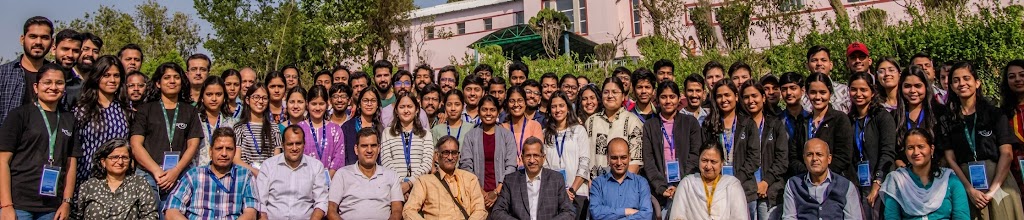
Each summer, ARIES organizes the ARIES Training School in Observational Astronomy and Atmospheric sciences (ATSOAA) to introduce students to the fundamentals of observational techniques in astronomy and atmospheric sciences. The program includes lectures on topics such as: Telescopes and Instrumentation, Star Formation and Evolution, Galactic and Extragalactic Astronomy, and various topics of atmospheric sciences. It is intended primarily for students in the first or second year of M.Sc. (Physics/Astrophysics), fourth or fifth year of Integrated M.S. (Physics), and fourth year of B.Tech. (Engineering Physics). Typically, 30–40 students from institutions across India are selected. The school includes: interactive sessions with ARIES faculty, Ph.D. students, and Post-Doctoral Fellows, hands-on training in astronomical data analysis, and a visit to ARIES observational facilities, including a one-day trip to the Devasthal Observatory, home to one of India’s largest optical telescopes.
Click here for more details...ARIES CAMPUS
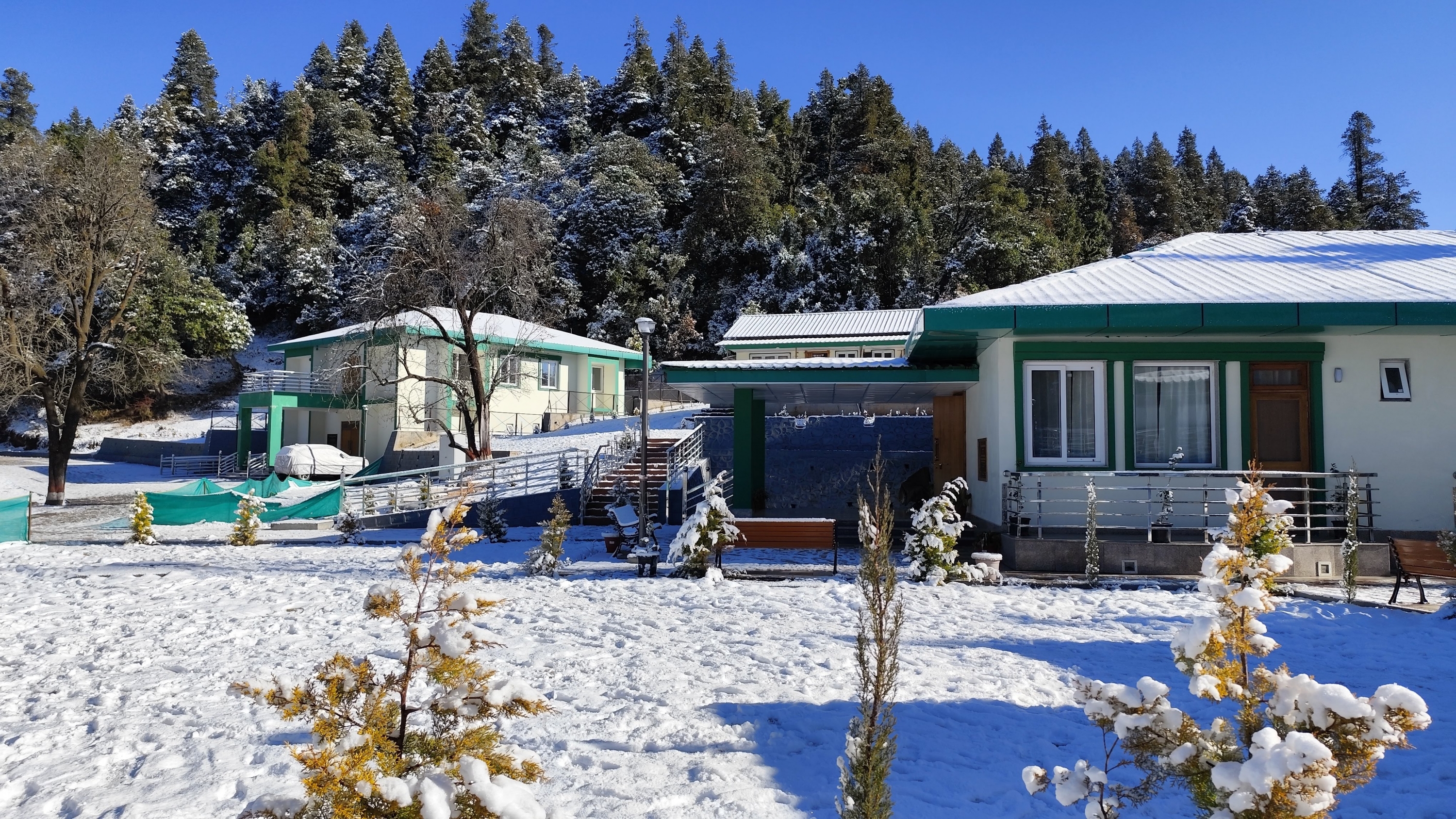
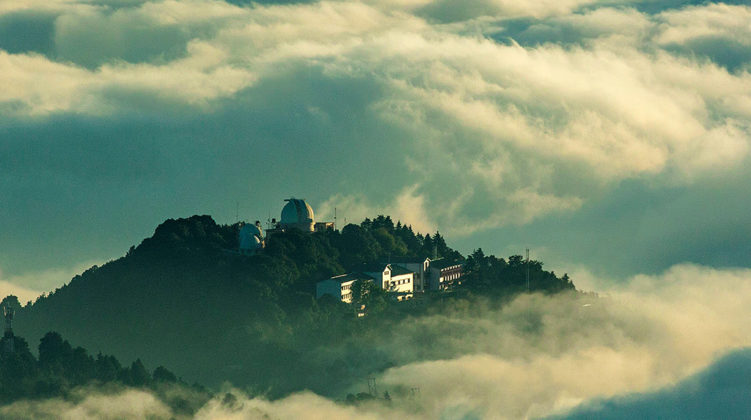
Breathtaking Himalayan peaks. Pristine mountain air. World-class space science. Located at Manora Peak, the ARIES campus offers researchers an unmatched ecosystem for discovery, anchored by the legendary Devasthal Optical Telescope (DOT).
SPORTS & YOGA
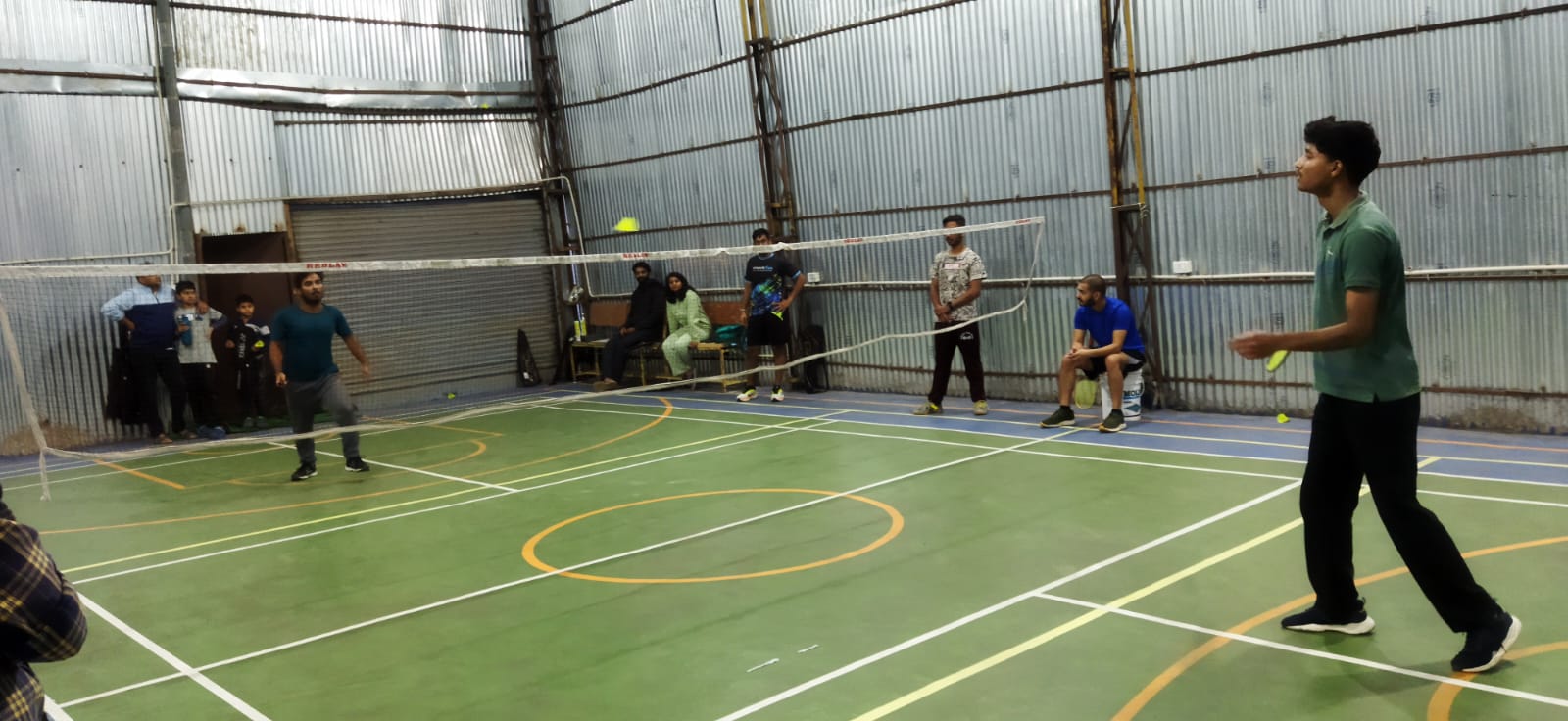
A healthy mind resides in a healthy body. At ARIES Nainital, recreational sports and outdoor activities provide our researchers with the perfect wellness break, helping them beat research burnout and stay sharp for complex scientific work.
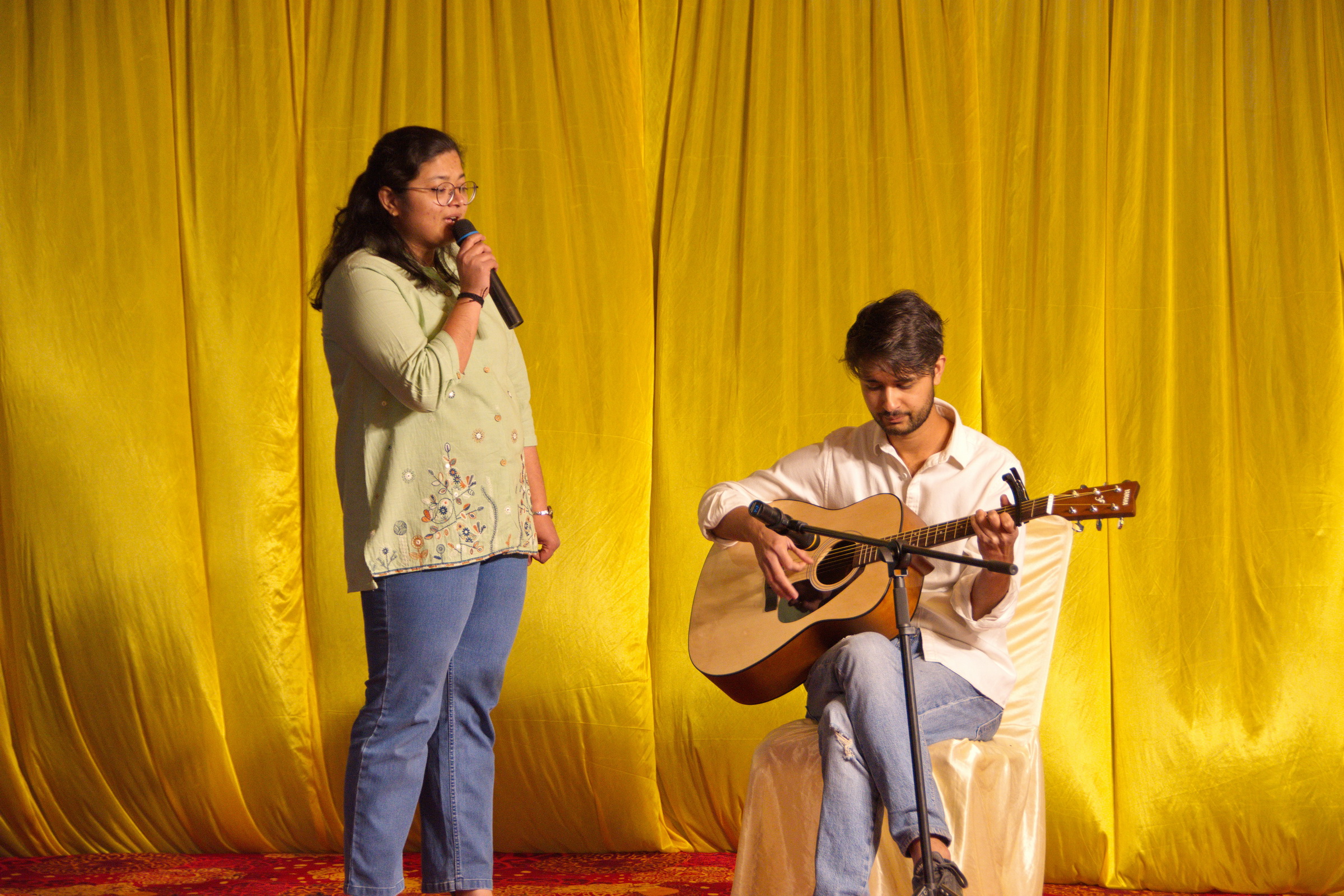
Cultural Fest
From music and dance to art evenings, ARIES Nainital celebrates the cultural diversity of its campus. Nestled in the Himalayas, these events foster camaraderie among researchers and staff, offering a rejuvenating break from the rigor of astronomical and atmospheric sciences.
Hostel Life
Nestled in nature, our hostels provide a peaceful and supportive home away from home. Here, students experience the unique magic of living under clear, star-lit Himalayan skies—offering the perfect backdrop for relaxation and scientific curiosity.